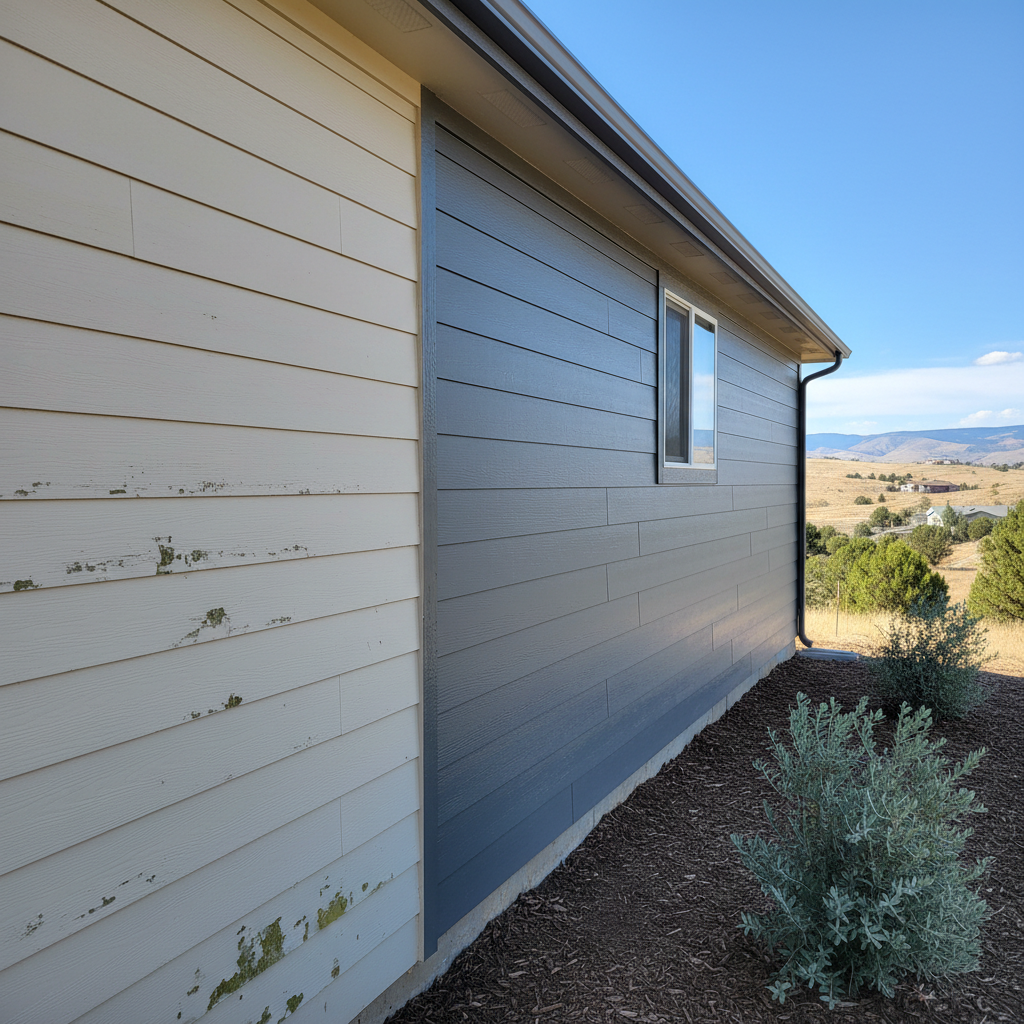
Alright, let's talk about your home's siding. You know it's important, right? It's what protects your house from everything our Utah weather throws at it – those brutal summer sun rays, the heavy snow in winter, and the crazy temperature swings we get, especially around the Bennion and Cottonwood West neighborhoods. So, how do you make sure it's doing its job? You inspect it. But here's the big question: do you grab a ladder and do it yourself, or do you call in a professional?
DIY Siding Inspection: The Good, The Bad, and The "Oops"
Look, I get it. You're a homeowner, you're handy, and you want to save a buck. A DIY inspection sounds like a smart move. And for some things, it absolutely is. You can walk around your house, look for obvious cracks, missing pieces, or paint that's peeling. You can tap on a few spots to see if anything sounds hollow, which might indicate rot underneath. You can check the caulking around windows and doors.
Cost: Zero, besides your time and maybe a new pair of binoculars if you're trying to see the high spots without a ladder. That's a big draw for a lot of folks.
Durability: This isn't about the durability of the inspection itself, but what you might miss. If you don't know what you're looking for, small issues can become big problems. You might see a tiny crack and think it's nothing, but that tiny crack could be letting water in, slowly rotting out your sheathing. Our dry climate here in Taylorsville can sometimes mask moisture damage until it's really advanced.
Maintenance: Your DIY inspection is a good start for identifying basic maintenance needs, like re-caulking a window or touching up some paint. But you're probably not going to catch subtle signs of fastener failure or early stages of mold growth behind the siding.
Appearance: You'll definitely spot anything that's making your house look bad – faded color, obvious dings, or a panel that's clearly out of whack. That's easy enough to see.
The biggest downside to DIY? You're relying on your own untrained eye. You might miss critical signs of water intrusion or structural issues that aren't immediately obvious. And frankly, getting up on a ladder to inspect your second story is risky business if you're not used to it. I've seen more than a few homeowners end up with a sprained ankle trying to save a few bucks.
Professional Siding Inspection: An Investment, Not an Expense
Now, let's talk about bringing in someone who does this for a living. When I, or one of my crew from Majestic Siding Solutions, come out for an inspection, we're not just looking at the surface. We're looking at the whole system.
Cost: Yes, there's a cost involved. It varies, but it's an upfront investment. Think of it like a check-up at the doctor – you pay for their expertise to catch problems early.
Durability: This is where a pro inspection shines. We know the common failure points for different siding materials. We're looking for subtle signs of moisture intrusion, proper flashing around windows and doors, adequate ventilation, and fastener integrity. We're checking for things like efflorescence on brick, which can point to water issues, or subtle warping in vinyl that indicates heat stress. We understand how our local weather patterns, like those strong canyon winds or the freeze-thaw cycles, impact siding over time. We've seen what happens when homes built on the older, clay-rich soils around here settle, and how that can affect siding.
Maintenance: A professional inspection will give you a comprehensive list of maintenance items, from minor repairs to potential future issues. We can tell you if that small crack needs a simple caulk or if it's a symptom of a bigger problem that needs a panel replacement. You'll get advice on cleaning, painting cycles, and how to extend the life of your specific siding material.
Appearance: We'll certainly note anything that impacts curb appeal, but more importantly, we'll identify underlying issues that might be causing those cosmetic problems. For example, faded paint might just be old, or it could be a sign that your siding is absorbing too much moisture.
A pro inspection often involves getting into attics or crawl spaces if accessible, using moisture meters, and really understanding the construction of your home. We're looking for the root cause, not just the symptom.
My Recommendation for Taylorsville Homeowners
Here's the deal: for basic, routine checks, a DIY walk-around is fine. If you see something really obvious, like a big hole or a piece of siding hanging off, you know you need to call someone. But for a thorough, preventative inspection that truly protects your biggest investment, you need a professional.
Our climate in Taylorsville is tough on homes. The intense UV radiation from our high elevation, the heavy snow loads, and the drastic temperature swings mean your siding takes a beating. Missing a small issue now can lead to thousands of dollars in repairs later – rot, mold, structural damage. It's not worth the risk.
I always recommend a professional siding inspection every few years, especially if your home is over 10-15 years old, or if you've noticed any changes in your home's performance, like higher energy bills or drafts. It's peace of mind, and it's smart homeownership. Don't wait until you've got a leaky wall to figure out your siding's in trouble.